Top 7 Cubic Foot Fridges for Small Spaces
Finding the right refrigerator for a tight space can be frustrating, especially when you need useful storage without sacrificing room or energy efficiency. You’re not alone—many people struggle to compare compact models that fit their space and lifestyle.
This guide to the top 7 cubic foot fridges for small spaces makes the decision easier.
For a small space, choose a 7-cubic-foot fridge with adjustable shelves, a separate freezer, reversible door, interior lighting, and quiet, energy-efficient operation.
Measure your space, doorway, ventilation area, and door clearance before buying.
Dorm users should prioritize low noise and flexible placement, while RV owners need sturdy shelves, leveling feet, travel latches, and compatible power requirements.
Compare EnergyGuide ratings, warranties, customer feedback, and storage layouts to find the best match.
The options below make your choice easier.
Key Takeaways
- Choose a 7-cubic-foot fridge with adjustable shelves, door bins, and a separate freezer for flexible organization.
- Measure width, depth, height, ventilation space, and door clearance before selecting a model for your small space.
- Prioritize ENERGY STAR certification, efficient LED lighting, strong door gaskets, and low-GWP refrigerants to reduce operating costs.
- Select quiet models with reversible doors, leveling feet, and suitable dimensions for dorms, apartments, offices, or RVs.
- Compare temperature controls, warranty coverage, customer reviews, durability, and annual energy use rather than price alone.
How to Choose a 7-Cubic-Foot Fridge

When choosing a 7-cubic-foot fridge, focus on the features that match your space and daily routine. Measure your available area, including width, depth, height, and door clearance, before you shop.
Choose a 7-cubic-foot fridge by measuring your space carefully and considering how its features fit your daily routine.
A Compact design helps you fit the appliance beneath counters or inside tight kitchens, dorms, offices, and recreational spaces. Check the interior layout, including adjustable shelves, door bins, and freezer placement, to assure it accommodates the foods you store most often.
Compare temperature controls and look for consistent cooling across the compartment. Energy efficiency can lower operating costs, so review the annual energy-use estimate and certification label.
Consider noise levels if you’ll place the fridge near a bedroom or workspace. Decide whether you need a reversible door, leveling feet, or a lock.
Finally, verify the warranty, delivery requirements, and return policy. Prioritize measurable fit and practical features instead of choosing based on appearance alone for your needs.
Best Overall 7-Cubic-Foot Fridge

The best overall 7-cubic-foot fridge balances usable storage, reliable temperature control, quiet operation, and efficient energy use. Choose a model with adjustable shelves, a separate freezer compartment, and a reversible door so you can adapt it to your space. A smooth thermostat helps you protect fresh food without wasting electricity.
| Feature | Why It Matters | What You’ll Notice |
|---|---|---|
| Adjustable shelves | Fits varied containers | Flexible storage organization |
| Reversible door | Suits different layouts | Easier placement |
| Separate freezer | Keeps foods distinct | Better access |
| Energy-efficient design | Reduces power use | Lower operating cost |
Look for interior lighting and sturdy, easy-clean surfaces, too. You’ll appreciate quiet operation in shared living areas, while dependable seals help maintain consistent temperatures.
For maintenance, clean the coils periodically, check the gasket for gaps, and defrost when ice buildup restricts space. Organize frequently used items at eye level, leave room for airflow, and avoid overloading shelves.
This combination gives you practical capacity and dependable everyday performance.
Best 7-Cubic-Foot Fridge for Dorms
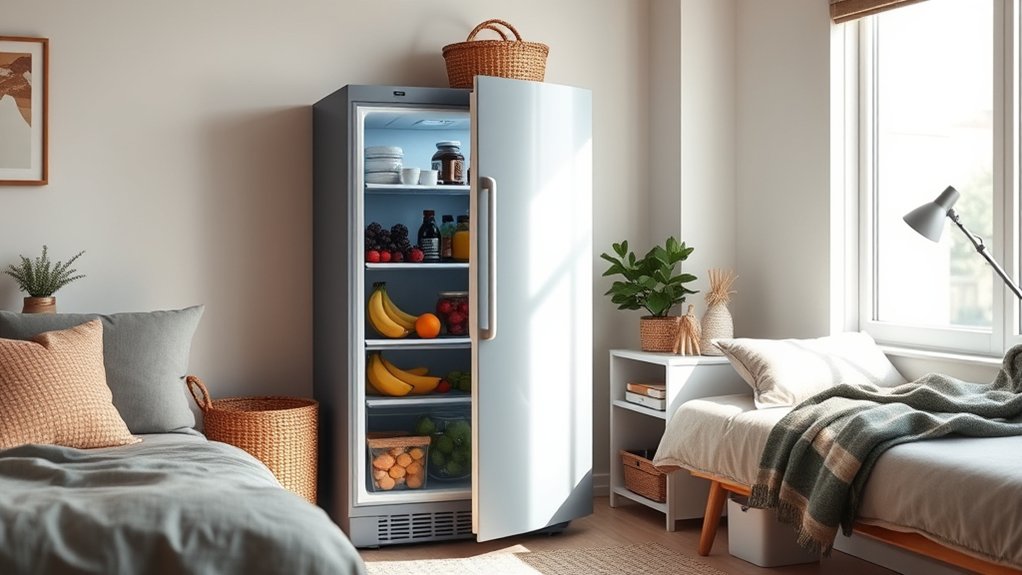
For dorm living, choose a 7-cubic-foot fridge that offers practical storage without creating excessive noise or using unnecessary energy. You’ll appreciate adjustable shelves, a dedicated freezer compartment, and door bins that keep drinks, snacks, and meal containers organized.
This storage capacity suits one or two students without overwhelming a shared room. Prioritize a compact, energy-efficient model with a reversible door, especially if your dorm layout gives you limited placement options.
Check the manufacturer’s noise rating before buying. Low noise levels matter when you’re studying, sleeping, or sharing a tight space. A quiet compressor and steady temperature control can make daily use more comfortable.
Look for easy-to-clean shelves, an adjustable thermostat, and a dependable warranty. You don’t need premium features such as an ice maker or smart connectivity, which can consume space and raise the price.
Choose a finish that resists fingerprints, then measure your allotted area carefully. Confirm that the fridge fits with adequate ventilation.
Best 7-Cubic-Foot Fridge for RVs
When you’re choosing a 7-cubic-foot fridge for your RV, start by making sure it fits the available space. Look for a model with secure storage, reliable operation, and efficient cooling while you’re on the road. The right fridge will keep your food fresh without taking over your RV’s limited interior.
Compact RV-Friendly Design
If you’re outfitting an RV, a compact 7-cubic-foot refrigerator gives you useful storage without overwhelming your limited space. Choose a model with a slim profile, reversible door, and adjustable feet so you can fit it neatly beneath a counter or beside existing cabinetry.
Before buying, measure the opening, doorway, and clearance around hinges. A flush design helps you preserve walking room, while a clean finish complements your RV’s interior layout.
White suits classic campers, stainless steel adds urban aesthetics, and black creates a discreet look. Prioritize sturdy shelves, a secure door latch, and simple controls that you can reach comfortably.
A lightweight unit also makes installation easier and reduces strain on built-in cabinetry. With the right dimensions and finish, you’ll gain practical cold-storage capacity without making your RV feel cramped.
Efficient Travel Cooling
A 7-cubic-foot RV refrigerator keeps drinks, ingredients, and leftovers cold without demanding excessive power or space. You’ll appreciate its compact design when cabinet measurements limit your choices.
Choose a model with adjustable shelves, a reversible door, and dependable temperature control, so you can organize meals and adapt to uneven parking conditions. Efficient insulation reduces compressor cycling, helping preserve battery power during overnight stops.
For reliable portable cooling, verify the fridge supports your RV’s available power source and includes secure travel latches.
| Feature | Travel benefit |
|---|---|
| Adjustable shelves | Fits varied groceries |
| Reversible door | Simplifies installation |
Before departure, pre-cool the refrigerator at home, load chilled food, and leave airflow around vents. Keep the unit level whenever possible, because balanced placement supports efficient operation.
A seven-cubic-foot capacity gives you room for several days of meals while remaining manageable in a compact RV kitchen. Choose efficiency over unnecessary extras to protect your energy budget.
Best Low-Energy 7-Cubic-Foot Fridge
When you’re choosing a low-energy 7-cubic-foot fridge, start by checking its ENERGY STAR rating. Then, compare the annual energy consumption to estimate your ongoing electricity costs. It’s also worth looking for eco-friendly cooling features that help reduce power use without compromising performance.
Energy Star Ratings
For a low-energy 7-cubic-foot fridge, look for an ENERGY STAR rating, which indicates that the model meets strict efficiency standards set by the U.S. Environmental Protection Agency.
When you choose a certified refrigerator, you’re selecting a design that uses less power while maintaining dependable cooling performance. That energy efficiency can help reduce your environmental impact and support lower household utility costs without sacrificing useful storage.
Check the yellow EnergyGuide label, but use it to compare models rather than confuse it with certification. You’ll also benefit from features such as improved insulation, efficient compressors, and better temperature controls.
These components may support appliance durability because they reduce unnecessary strain during operation. Before buying, confirm that the ENERGY STAR logo appears on the exact model, not merely the product line.
Annual Energy Consumption
After confirming the ENERGY STAR certification, compare each model’s estimated annual energy consumption. You’ll usually find this figure on the yellow EnergyGuide label or the manufacturer’s specifications.
A 7-cubic-foot fridge using fewer kilowatt-hours per year can reduce your electric bill, especially if you run it continuously. Don’t judge efficiency by purchase price alone.
Estimate yearly operating costs by multiplying the listed kilowatt-hours by your utility’s rate. Then compare those totals across models to identify the best low-energy option.
You can also lower consumption with practical energy-saving tips. Set the refrigerator compartment near 37°F, keep the freezer at 0°F, and avoid placing the appliance beside a stove or in direct sunlight.
Regular appliance maintenance helps, too. Clean the door gasket, keep vents clear, and remove dust from accessible coils so the compressor won’t work harder.
Eco-Friendly Cooling Features
Which features make a 7-cubic-foot refrigerator more eco-friendly? When you shop for a low-energy model, look for an ENERGY STAR rating, efficient LED lighting, and adjustable electronic temperature controls.
These features help you reduce electricity use without sacrificing reliable cooling. Choose thick insulation and a well-sealed door gasket, which keep cold air inside and prevent the compressor from working overtime.
Check the label for annual energy consumption, then compare models before you buy. Pay attention to refrigerant types, too: newer options generally have lower global-warming potential than older chemicals.
If you live off-grid, solar refrigeration can power a compact fridge with appropriately sized panels and batteries.
Finally, select a durable model with recyclable components and a repairable design. You’ll lower operating costs while shrinking your environmental footprint over its lifespan.
Best 7-Cubic-Foot Fridge With Freezer
If you need more storage without sacrificing too much floor space, the best 7-cubic-foot fridge with a freezer gives you room for fresh and frozen foods in one compact appliance.
You’ll appreciate adjustable shelves, a separate freezer compartment, and reversible doors that suit tight kitchens, offices, or guest rooms.
Choose a model with reliable temperature controls and interior lighting for easier organization. Vintage aesthetics can add character, while smart technology may provide precise settings, alerts, or energy monitoring.
| Feature | Why It Matters | Best For |
|---|---|---|
| Separate freezer | Keeps frozen items accessible | Meal prep |
| Adjustable shelves | Fits tall containers | Flexible storage |
| Reversible door | Adapts to layouts | Small kitchens |
| Interior light | Improves visibility | Late-night snacks |
Measure your available space before buying, including clearance for ventilation and door movement.
You’ll also want quiet operation if you’ll place the fridge near a bed or workspace. Focus on usable capacity, dependable cooling, and a layout that matches your daily routine rather than decorative extras alone.
Best Budget 7-Cubic-Foot Fridge
For affordable cold storage, the best budget 7-cubic-foot fridge gives you practical capacity without stretching your budget. You’ll get enough room for drinks, produce, leftovers, and frozen essentials while keeping energy use manageable.
Look for an adjustable thermostat, a reversible door, and sturdy shelves so the appliance fits your space and routine. Interior organization matters when every shelf counts.
Choose a model with removable racks, door bins, and a separate freezer compartment if you need frozen storage. These features help you sort groceries and clean spills quickly.
Before buying, measure your available floor space and doorway clearance. Then check the warranty and temperature-control reviews.
Pay attention to noise levels, especially if you’ll place the fridge in a bedroom, office, or studio apartment. A low-cost model shouldn’t force you to tolerate constant humming.
Compare operating costs, included features, and customer feedback instead of choosing solely by the lowest price. With careful shopping, you’ll find dependable cooling at a budget-friendly cost.
Frequently Asked Questions
Can a 7-Cubic-Foot Fridge Operate Safely on a Standard Household Outlet?
Yes, you can safely run a 7-cubic-foot fridge from a standard household outlet, typically rated 120 volts and 15 or 20 amps. You should plug it directly into a grounded outlet, avoiding extension cords and overloaded power strips.
Check the appliance’s label for its startup amperage and follow the manufacturer’s instructions. Energy efficiency affects operating costs, while noise levels can indicate normal performance or potential mechanical problems.
How Often Should a 7-Cubic-Foot Refrigerator Be Defrosted?
Defrost your 7-cubic-foot refrigerator whenever ice reaches about ¼ inch thick, typically every three to six months. You’ll need to defrost more often in humid conditions or if you open the door frequently.
Excess frost reduces Energy efficiency and steals Storage capacity, forcing the appliance to work harder. Unplug the refrigerator, remove food, let the ice melt naturally, clean and dry the interior, then restart it before restocking.
Are Replacement Shelves and Door Bins Readily Available for These Refrigerators?
Yes, you’ll usually find shelf replacement parts and door bins for popular 7-cubic-foot refrigerators, but availability varies by brand and model. Check the appliance’s model number before ordering, compare dimensions, and verify mounting points.
You’ll often find parts through the manufacturer, authorized dealers, or major online retailers. For discontinued models, you may need compatible universal shelves or bins, marketplace listings, or salvaged parts. Keep your original components for accurate comparison.
What Warranty Coverage Typically Comes With a 7-Cubic-Foot Fridge?
You’ll typically get a one-year limited warranty covering defects in materials and workmanship on a 7-cubic-foot fridge. Some manufacturers extend sealed-system or compressor coverage to five or ten years, but labor may apply after the first year.
Warranty terms vary, so you should confirm exclusions, registration requirements, and authorized service rules. Energy efficiency and noise levels aren’t usually warranty-covered unless a documented defect causes performance outside stated specifications.
Can These Refrigerators Be Transported Safely on Their Sides?
Yes, you can transport these refrigerators on their sides, but treat them like sleeping giants. Check the manufacturer’s instructions first, because some models require upright travel.
If side placement remains necessary, secure the doors, cushion the appliance, and keep it level during loading. Follow these transportation tips: use a dolly and avoid rough handling.
Stand the refrigerator upright for several hours before plugging it in, allowing the compressor oil to settle safely.
Conclusion
Choosing the right 7-cubic-foot fridge comes down to matching capacity with your space, lifestyle, and energy needs. Measure carefully, compare features, and prioritize dependable cooling over flashy extras.
Remember, refrigerators typically account for about 7% of a home’s electricity use, so an efficient model can make a noticeable difference over time. Whether you’re furnishing a dorm, RV, or compact kitchen, the best 7 cubic foot fridge will keep essentials fresh without overwhelming your room or budget.