
Induction Range Vs Electric Range €“ 7 Key Differences
Choosing between an induction range and an electric range can feel confusing, especially when you want faster cooking, easier cleanup, and better energy efficiency without overspending. You’re not alone—many home cooks struggle to know which option fits their kitchen and lifestyle.
An induction range heats magnetic cookware directly, so you get faster, more precise results than with an electric range’s radiant element. You’ll need compatible, flat-bottomed pans for induction, while electric models work with most cookware.
Induction uses less energy, stays cooler, and cleans more easily, but costs more upfront and may require special installation. Electric ranges offer lower initial costs and simpler replacement.
Your cooking habits, budget, and long-term plans will guide the better choice, as the key differences below explain.
Key Takeaways
- Induction ranges heat compatible cookware directly, making them faster and more responsive than electric ranges.
- Electric ranges accommodate most flat-bottomed cookware, while induction requires magnetic materials such as cast iron or magnetic stainless steel.
- Induction cooktops generally use less energy and may reduce utility costs through efficient, direct heat transfer.
- Induction surfaces cool faster and are easier to clean, whereas electric elements remain hot and require more maintenance.
- Electric ranges usually cost less initially and install more easily, while induction may offer greater long-term value for frequent cooks.
How Do Induction and Electric Ranges Heat Food?

Induction ranges use electromagnetic energy to heat compatible cookware directly, so the pan warms quickly while the cooktop stays relatively cool. Beneath the glass surface, a magnetic field creates electrical currents in the pan’s metal base. Those currents produce heat inside the cookware, which then warms your food.
Induction heats compatible cookware directly, delivering rapid, efficient cooking while keeping the surrounding cooktop relatively cool.
You’ll need magnetic pans, such as cast iron or many stainless-steel models, for this process to work.
Electric ranges transfer heat differently. An electrical current heats a metal coil or radiant element, and that hot surface passes heat through the cookware’s base. The element and surrounding glass also retain heat after you lower or shut off the setting, so you’ll need to adjust carefully.
Your choice affects cooking efficiency and temperature control. Induction responds directly when you change the setting, while electric elements respond through their own heating and cooling cycle.
In either case, matching pan size to the element helps you use energy effectively and maintain steadier cooking results.
Induction vs Electric Cooking Speed

When speed matters, you’ll usually find that induction boils water and heats pans faster than a conventional electric range. Induction transfers energy directly into the cookware, so you get rapid heating with less wasted energy.
You can bring a pot of water to a boil in noticeably less time, which helps when you’re preparing pasta, blanching vegetables, or making soup.
Electric ranges can still cook effectively, but their heating elements typically need more time to warm up and cool down. That slower response can extend cooking times, especially when you switch between high and low heat.
Induction also improves cooking efficiency because it reaches your target temperature quickly and responds almost immediately when you adjust the setting.
For everyday meals, you’ll appreciate that speed without sacrificing precision. Better temperature control helps you prevent scorching, reduce simmering delays, and move smoothly between cooking stages.
Your actual results will vary with pan size, food quantity, and power level, but induction generally offers the faster, more responsive cooking experience.
What Cookware Works With Each Range?
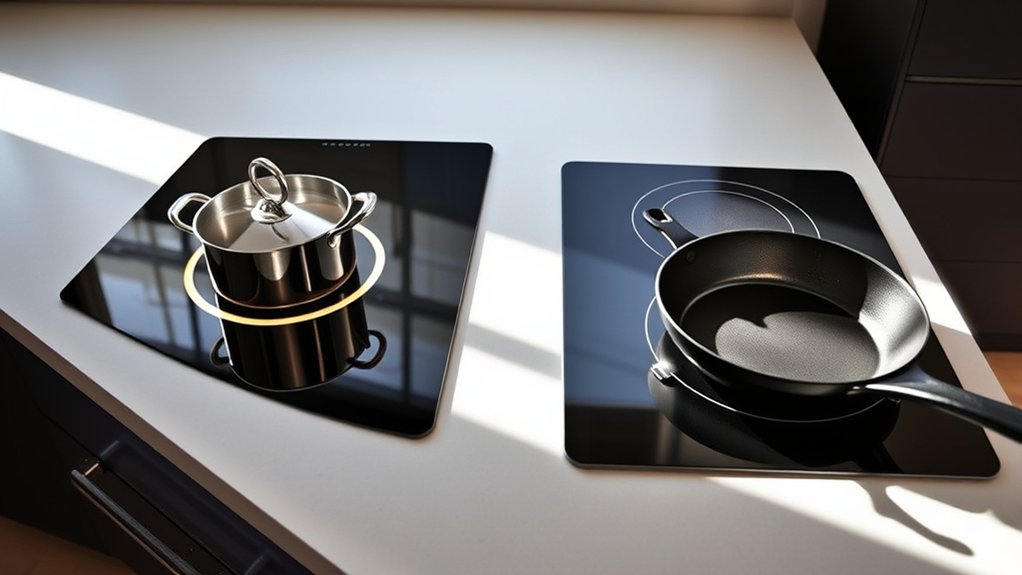
Your induction range needs cookware with a magnetic base, such as cast iron or magnetic stainless steel. By contrast, an electric range works with most flat-bottomed cookware, including aluminum, copper, stainless steel, and glass. Before cooking, check that each pan is compatible with your range so you get even, reliable results.
Induction-Compatible Cookware
Cookware compatibility is one of the biggest differences between induction and electric ranges. If you choose induction, you’ll need pots and pans with a magnetic base. Cast iron, enameled cast iron, and most stainless-steel cookware typically work well.
To check a piece, hold a magnet against its bottom. If it sticks firmly, the pan should heat on an induction cooktop. Look for an induction-compatible symbol or verify the manufacturer’s specifications before buying.
Flat, smooth bottoms provide better contact and more even heating. Avoid aluminum, copper, glass, and nonmagnetic stainless steel unless they include a magnetic layer.
Using the right cookware supports induction cooking safety because compatible pans remain stable and heat efficiently. You’ll also protect the cooktop by lifting pans instead of sliding them across its surface during cooking.
Electric Range Cookware
Electric ranges work with nearly any flat-bottomed cookware, including aluminum, copper, stainless steel, glass, and cast iron. You won’t need magnetic bases, so you can use the pans you already own.
Choose cookware with a smooth, level bottom to maximize contact with the heating element and promote even cooking. Heavy-gauge pans distribute heat more consistently, while warped or rough cookware may cook unevenly and scratch a glass cooktop.
Match pan sizes to your burners. Oversized pans heat slowly, while undersized ones waste energy.
Oven-safe cookware also expands your options when you move dishes from the stovetop to the oven. Although electric ranges don’t require Smart technology or specialized pans, their broad compatibility gives you excellent Cooking versatility.
Always check manufacturer instructions for temperature limits, especially with glass lids and nonstick coatings.
Which Range Uses Less Energy?
Which Range Uses Less Energy?
Induction ranges generally use less energy than traditional electric ranges because they transfer heat directly to compatible cookware instead of heating a burner first. You’ll typically get faster heating with less wasted energy, which can lower your kitchen’s overall power consumption.
Traditional electric ranges warm a coil or smooth-top surface, then transfer that heat to your pan. Some energy escapes during each step, especially when you adjust temperatures or use mismatched cookware.
- Direct heating: Induction energizes the pan itself, so more electricity becomes usable cooking heat.
- Faster cooking: You’ll reach boiling temperatures sooner, shortening cooking times and reducing energy use.
- Better control: Quick temperature changes help you avoid prolonged heating and unnecessary electricity consumption.
Your actual savings depend on cooking habits, pan size, cookware compatibility, and local electricity rates. An induction range may cost more initially, but its energy efficiency can offset part of that price over time.
If you cook frequently, compare annual usage estimates on appliance labels before choosing between technologies.
How Safe Are Induction and Electric Ranges?
Beyond energy use, safety can also shape your choice between induction and electric ranges. Induction models generally offer strong protection because the cooktop heats only when compatible cookware sits on the cooking zone.
When you remove the pan, heating stops, and the surface cools faster than a traditional electric element. You’ll also find safety features such as pan detection, automatic shutoff, child locks, and residual-heat indicators.
Electric ranges remain dependable, but their exposed or radiant elements stay hot after you turn them off. You can accidentally touch the surface or place a towel, utensil, or plastic item nearby, creating burn risks and potential fire hazards.
Both range types can cause spills, burns, or fires if you leave cooking unattended, so you should keep flammable items away and use appropriate cookware. Induction isn’t risk-free, however: pacemakers may require medical guidance, and magnetic cookware is essential.
Check your model’s safety instructions before installation and use.
Which Range Is Easier to Clean?
When cleanup matters, induction ranges usually make the job easier because their smooth, relatively cool surfaces don’t bake spills onto the cooktop as quickly. You can wipe most messes away with a damp cloth after cooking, once the surface cools. Since induction heats the pan directly, food splatters typically don’t become stubborn, burned-on residue.
- Induction: Use a soft cloth and mild cleaner. Avoid abrasive pads that could scratch the glass. Lift cookware instead of sliding it to prevent marks.
- Electric: Coil burners require more effort. Remove the coils when they’re cool, clean the drip pans separately, and wipe the surrounding surface carefully. Smooth-top electric models clean comparably to induction but may retain more heat.
- Extra areas: Don’t forget knobs, control panels, and oven doors. Grill maintenance takes additional scrubbing on either range if you use a griddle or grill pan.
Your ventilation requirements also affect cleanup. Effective ventilation reduces greasy buildup on nearby cabinets and walls. Overall, induction offers the simplest routine, while electric ranges demand more attention around coils and drip pans.
Which Range Is Worth the Cost?
Which range is worth the cost depends on how you cook and how long you plan to keep it. An electric range usually costs less upfront, making it attractive if you’re replacing an old appliance on a tight budget.
However, induction models often use less energy, heat faster, and offer better temperature control. Those advantages can reduce utility bills and improve daily cooking, helping you recover the higher purchase price over time.
Your cost comparison should include cookware, maintenance, and expected lifespan, not just the sticker price. Induction requires magnetic cookware, so you may need new pots and pans.
Check installation requirements, too. Both ranges typically need a dedicated electrical circuit, but an induction model may require specific amperage or professional setup.
If your kitchen already supports electric cooking, installation costs may remain manageable. Choose electric if you prioritize low initial spending and simple replacement.
Choose induction if you cook frequently, value efficiency, and plan to stay in your home long enough to benefit from its performance and savings.
Frequently Asked Questions
How Noisy Are Induction Ranges During Operation?
You’ll usually hear a low hum, buzz, or faint whir when an induction range operates. Sound levels vary with cookware size, material, and power setting; lightweight or uneven pans can vibrate more noticeably.
Cooling fans may also run after cooking, adding a gentle airflow sound. In a Noise comparison, induction ranges aren’t silent, but they’re typically no louder than a microwave and quieter than a gas burner’s flame.
Do Induction and Electric Ranges Require Different Electrical Connections?
Usually, you won’t need a different electrical connection: both induction and electric ranges commonly use a dedicated 240-volt circuit. However, installation requirements can vary by model, wattage, and local code.
You’ll need to check the manufacturer’s specifications, breaker size, outlet type, and wiring. Compatibility considerations matter, especially when replacing an older range.
Since induction uses electronics and powerful heating coils, have a qualified electrician verify your setup before installation.
How Long Do Induction and Electric Ranges Typically Last?
You can typically expect both induction and electric ranges to last 10–15 years with proper care. Induction models may reach the longer end because their smooth surfaces and sealed components reduce wear, though electronic controls can require costly repairs.
Electric ranges often have simpler, easier-to-replace parts. Your cooking efficiency and maintenance requirements matter: clean spills promptly, avoid heavy impacts, and follow the manufacturer’s service recommendations to maximize either range’s lifespan.
Are Induction and Electric Ranges Available in Different Sizes and Designs?
Yes, you’ll find both induction and electric ranges in various sizes and designs. Size options typically include compact 24-inch models, standard 30-inch ranges, and larger 36-inch versions, depending on your kitchen space.
Design versatility includes freestanding, slide-in, and built-in configurations, plus finishes such as stainless steel, black, and white. You can also choose different control layouts, oven capacities, burner arrangements, and smart features to match your cooking habits and décor.
Can Power Outages Affect Induction and Electric Range Functionality?
Power outages promptly pause both induction and electric range functionality because each needs electricity to heat. The power outage impact differs slightly: induction can’t generate heat without electronic controls, while an electric range can’t energize its heating elements.
You won’t cook during an outage unless you have an emergency backup, such as a generator or battery system. Gas appliances may still work, though electric ignition could fail, so keep matches and safe alternatives available.
Conclusion
Choosing between an induction and electric range comes down to what suits your kitchen and habits. If you value rapid heating, precise control, lower energy use, and a cooler cooking surface, induction may be the polished performer you’ve been waiting for.
If you prefer broader cookware compatibility and a gentler price tag, electric remains a dependable choice. Weigh your priorities, budget, and safety needs, then choose the range that makes everyday cooking feel effortless.
Ultimately, comparing an induction range vs. electric range can help you choose the option that best fits your everyday cooking needs.


