Differences Between Oven and Steam Oven: 3 Key Points
Choosing between an oven and a steam oven can be confusing, especially when you want perfectly cooked food without adding more work to your routine. You’re not alone—many home cooks struggle to balance crisp, browned results with meals that stay moist and nutritious.
In this guide to the differences between oven and steam oven, we’ll compare cooking performance, cost, cleaning, and everyday use to help you find the best fit for your kitchen.
A conventional oven uses dry heat to brown, crisp, and roast foods, while a steam oven uses moist heat to cook gently and retain moisture, color, and nutrients.
You’ll typically pay less for a conventional oven and enjoy simpler cleaning, whereas a steam model costs more and needs regular descaling and water-tank care.
Choose based on your preferred results, budget, and maintenance routine. The sections below explain which foods, costs, and daily uses best match each option.
Key Takeaways
- Conventional ovens use dry heat, while steam ovens cook with moist heat that transfers warmth efficiently.
- Conventional ovens produce crisp browning and crusts; steam ovens preserve moisture, tenderness, color, and nutrients.
- Steam ovens suit fish, vegetables, grains, and lean meats, while conventional ovens handle baking and roasting better.
- Steam cooking may reduce cooking temperatures and times, but steam ovens usually cost more initially.
- Conventional ovens are generally easier to maintain, whereas steam ovens require descaling and water-tank care.
Steam Oven vs. Conventional Oven: Key Differences
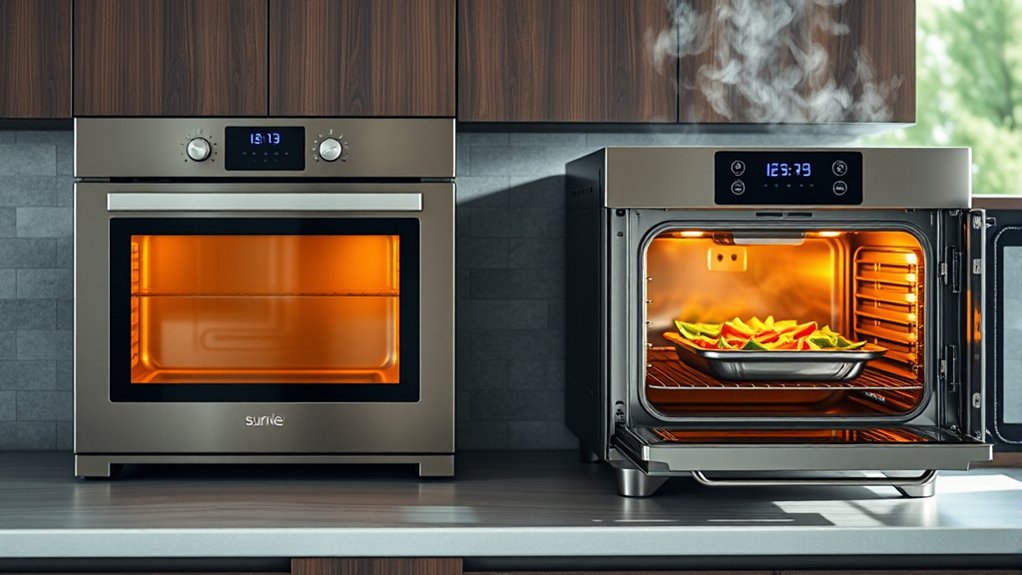
Steam ovens cook food with moist heat, while conventional ovens rely on dry, circulating heat. When you choose steam, water vapor transfers heat efficiently and helps maintain a humid cooking environment.
Steam ovens use moist heat for gentle, efficient cooking, while conventional ovens depend on dry, circulating heat.
You’ll typically fill a reservoir or connect a water line, then select a steam setting, temperature, and duration. A conventional oven needs no water supply and uses heating elements or gas burners to raise the air temperature.
These differences affect cooking techniques. Steam supports gentle, even heating, while conventional heat promotes browning through surface drying and direct hot-air circulation.
Combination models let you alternate or combine both methods, giving you greater control over moisture and crust development.
You’ll also notice differences in energy efficiency. Steam can reduce cooking temperatures and shorten cooking times, potentially lowering energy use.
However, the appliance’s design, insulation, preheating habits, and selected settings matter. Conventional ovens offer familiar controls and broad versatility, while steam ovens require regular reservoir cleaning and descaling for reliable performance.
Which Foods Work Best in Each Oven?
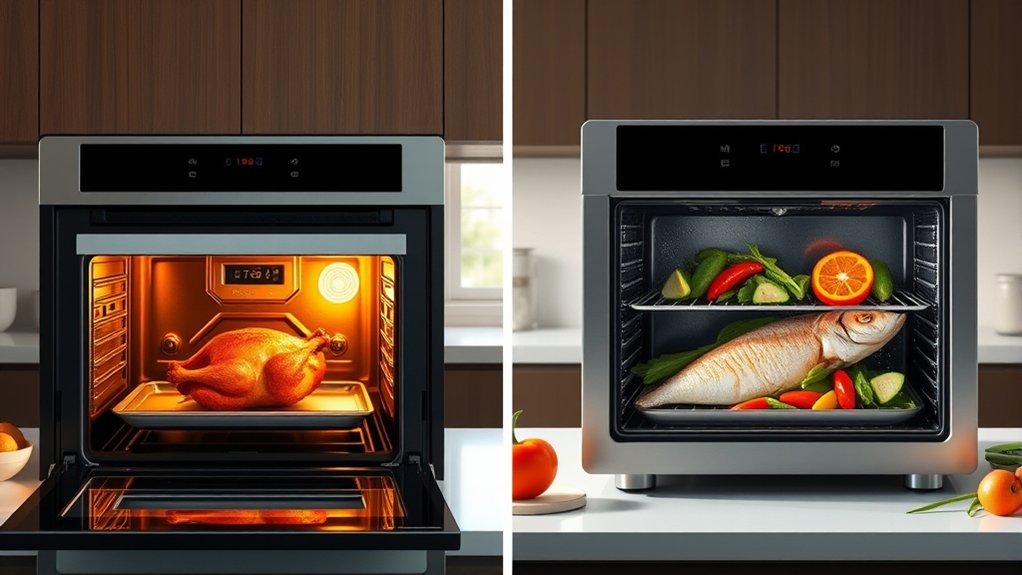
While both ovens handle everyday meals, each suits different foods. Choose a conventional oven when you want crisp edges, browning, or a firm crust.
It’s ideal for bread, cookies, pastries, roasted potatoes, pizza, casseroles, and vegetables that benefit from dry, intense heat. You can also use it for meats when you’re aiming for a deeply browned exterior.
Choose a steam oven for foods that can dry out during cooking. Fish, chicken breasts, rice, grains, dumplings, and vegetables stay tender and moist with added steam.
Steam also supports Healthy cooking because you can prepare food with little or no oil while preserving its natural texture. For vegetables, steam helps maintain color, nutrients, and Flavor retention.
You’ll also find a steam oven useful for reheating leftovers, since gentle moisture keeps them from becoming tough.
When you need both tenderness and browning, start with steam, then finish with dry heat for a polished result.
Cost, Cleaning, and Daily Use
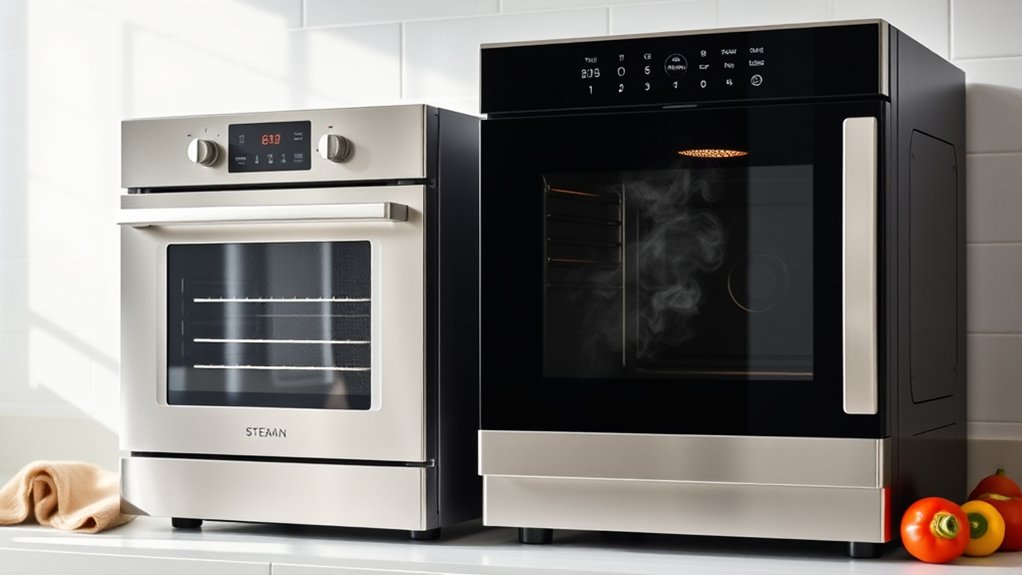
When you compare costs, a conventional oven usually has a lower purchase price and simpler maintenance, while a steam oven may cost more because of its specialized features and water system. You’ll also consider daily operating expenses.
Steam cooking can improve energy efficiency by shortening cooking times, while conventional models may use more power for long preheating.
| Factor | Conventional oven | Steam oven |
|---|---|---|
| Purchase cost | Usually lower | Usually higher |
| Cleaning | Wipe spills; clean racks | Descale tank; wipe interior |
| Daily use | Familiar and flexible | Moist, quick, and gentle |
You’ll find conventional ovens straightforward to clean, especially when they include self-cleaning cycles. However, baked-on grease still requires time and ventilation.
Steam ovens need regular descaling and water-tank care, particularly in hard-water areas. Their Smart features can simplify scheduling, temperature control, and maintenance reminders.
Choose a conventional oven if you want lower upfront costs and minimal upkeep. Choose steam if faster cooking, improved moisture, and convenient automation justify the added investment.
Consider your budget, cooking habits, and cleaning tolerance before deciding.
Frequently Asked Questions
Can Steam Ovens Replace Microwaves for Reheating Leftovers?
Yes, you can use a steam oven to reheat leftovers, but it won’t fully replace your microwave. You’ll get excellent Reheating Efficiency for moist foods, such as rice, vegetables, and casseroles, without drying them out. Steam also supports Nutrient Preservation and improves texture.
However, a microwave usually works faster for small portions and drinks. Choose a steam oven when quality matters more than speed, and a microwave for convenience.
Are Steam Ovens Safe for People With Limited Mobility?
Yes, you can use a steam oven safely with limited mobility when you choose appropriate mobility adaptations and safety features. Look for accessible controls, automatic door opening, side-hinged doors, telescoping racks, cool-touch surfaces, and clear displays.
Install the oven at a comfortable height, keep pathways clear, and avoid lifting heavy water tanks. You should also use heat-resistant gloves and ask for assistance with cleaning, maintenance, or hot cookware when necessary.
Do Steam Ovens Require Special Electrical or Plumbing Connections?
Your kitchen’s power and water lines form the steam oven’s lifelines. Electrical requirements usually include a dedicated, properly grounded circuit matching the manufacturer’s voltage and amperage specifications. Some countertop models plug into standard outlets, while built-in units may need hardwiring by an electrician.
Plumbing connections depend on the design: tank models require only a refillable reservoir, but plumbed models need a water supply, drainage, and professional installation. Always check your model’s instructions.
How Long Does It Take to Learn Steam Oven Controls?
You can learn basic steam oven controls in about 15–30 minutes, while confident steam oven operation usually takes several cooking sessions.
Your learning curve depends on the model’s interface, automatic programs, and cooking experience. Start with simple settings, such as steam, temperature, and timer adjustments.
Read the quick-start guide, practice with familiar recipes, and note how moisture affects cooking times. Within a week, you’ll likely feel comfortable experimenting with advanced functions.
Can Steam Ovens Help Preserve Nutrients in Vegetables?
Yes, steam ovens can help preserve nutrients in vegetables—think of giving your produce a gentle shield rather than sending it through a fiery trial. With vegetable steaming, you use moist heat and usually less water, so vitamins and minerals don’t dissolve as readily as they can during boiling.
For better nutrient retention, steam vegetables briefly, avoid overcooking, and serve them soon after cooking. You’ll keep their color, texture, and nutritional value.
Conclusion
Choosing between a steam oven and a conventional oven comes down to how you cook. If you want juicy vegetables, tender fish, and bread that practically sings, choose steam.
If you crave crisp roasts, golden casseroles, and everyday simplicity, stick with conventional heat. You can even combine both for astonishing results.
Consider your budget, cleaning habits, and favorite foods before deciding. Choose wisely, and you’ll transform ordinary meals into spectacular kitchen victories every single day. Understanding the differences between an oven and steam oven can help you make the right choice.