What Temp Should a Freezer Be Set At?
Many people struggle to find the right freezer temperature, especially when food develops freezer burn or doesn’t stay safely preserved. You’re not alone—setting your freezer correctly can make a big difference in food quality and energy use.
What Temp Should a Freezer Be Set At?
Set your freezer to 0°F (-18°C) or colder to keep food safely preserved and maintain its quality. Use a freezer-safe appliance thermometer to confirm the actual temperature, placing it near the center between food packages and away from vents or walls.
Adjust the setting gradually and wait 24 hours before checking again. Keep the door closed, maintain clear vents, and inspect the seal regularly.
You’ll find more tips for monitoring and maintaining the ideal temperature below.
Key Takeaways
- Set your freezer to 0°F (-18°C) or colder for safe, long-term food storage.
- Use an independent, freezer-safe thermometer to verify the actual temperature.
- Place the thermometer near the center, between food packages, away from walls, vents, and the door.
- Adjust the setting gradually, waiting 24 hours between changes for the temperature to stabilize.
- Check the temperature regularly and after power outages, frost buildup, or seasonal changes.
What Temperature Should a Freezer Be?
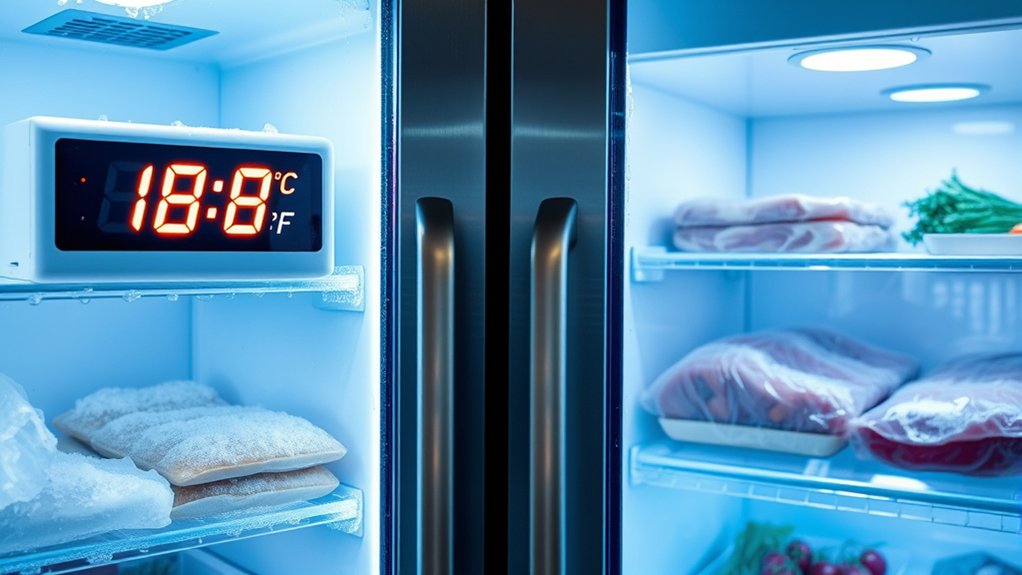
A freezer should be set to 0°F (-18°C) or colder to keep food safely frozen and maintain its quality. You’ll create a reliable environment for everyday food storage by selecting this setting on your appliance’s control panel.
Use an independent freezer thermometer to verify the actual temperature, since the displayed setting may not match conditions inside the compartment.
Place the thermometer where you can read it easily, then check it after the freezer has run undisturbed for several hours. If it reads warmer than 0°F, lower the control gradually and recheck it.
Avoid frequent adjustments, because the freezer needs time to stabilize. Temperature calibration may also require comparing your thermometer with a known accurate device or following the manufacturer’s instructions.
Keep the door closed during testing, and position the thermometer away from vents or the door.
Once you confirm a steady reading of 0°F or colder, mark the setting for future reference and monitor it periodically.
Why Should a Freezer Stay at 0°F?
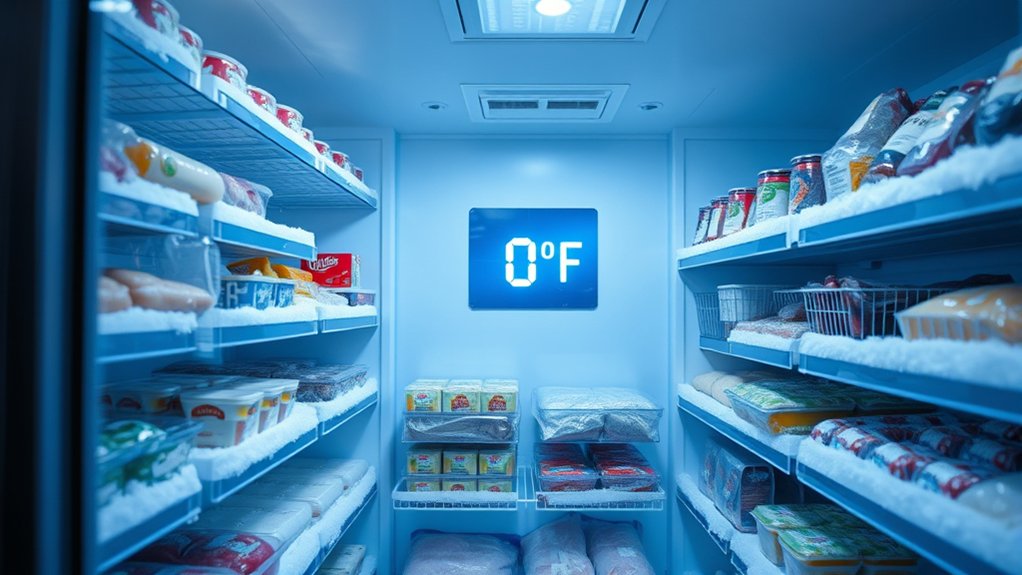
Keeping your freezer at 0°F (-18°C) or colder slows microbial growth and preserves food quality, so frozen items stay safe and retain their flavor, texture, and nutrients longer. This temperature also helps ice cream remain scoopable, vegetables retain their structure, and packaged foods resist drying and flavor changes.
Maintaining the recommended setting gives you more predictable storage conditions, whether you’re freezing leftovers, meat, or seasonal produce. You’ll also support Energy efficiency by avoiding unnecessarily low settings.
A freezer set far below 0°F must run longer and work harder, which can increase electricity use without meaningfully improving preservation. Check the temperature with an appliance thermometer rather than relying only on the control dial, since settings can vary by model.
Keep the door closed, allow air to circulate, and avoid packing items tightly against vents. These habits help maintain an even temperature and reduce frost buildup, allowing the appliance to operate smoothly and helping your food stay in better condition.
Is 0°F Cold Enough for Food Safety?
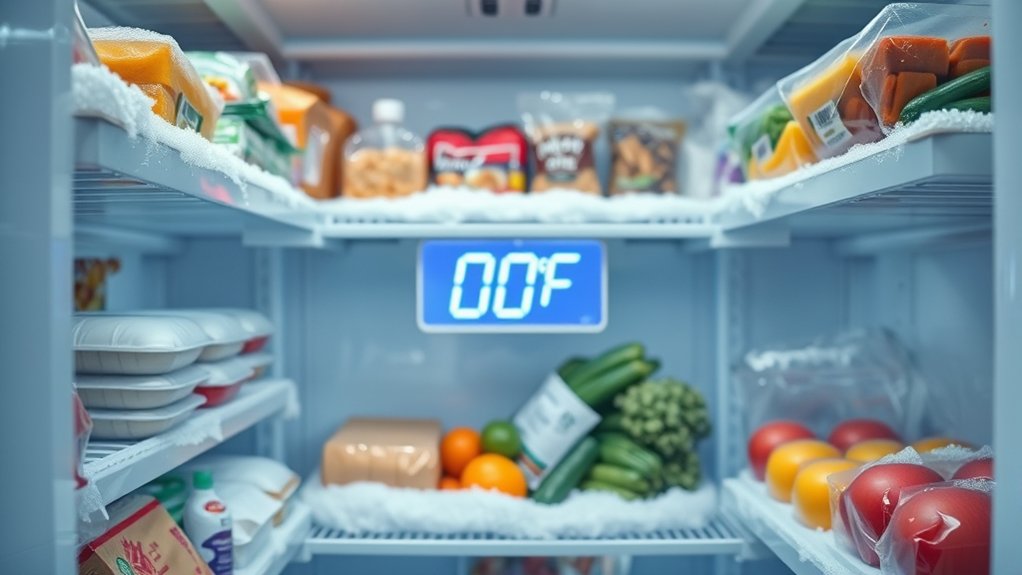
Yes—0°F (-18°C) is cold enough to keep frozen food safe by stopping most bacteria from growing. However, freezing doesn’t destroy every microorganism or reverse spoilage that happened before freezing. You’ll still need to handle food carefully, freeze it while it’s fresh, and follow package dates and storage guidance.
For dependable food storage, remember these points:
- Keep foods tightly wrapped or sealed to prevent freezer burn and protect quality.
- Don’t refreeze food that has fully thawed unless you cook it first.
- Discard items that smell unusual, look suspicious, or stayed warm for too long.
Maintaining 0°F also supports freezer efficiency and helps preserve texture, flavor, and nutrients over time. Quality gradually declines, even when food remains frozen and safe, so label packages with dates and use older items first.
Leave enough space for cold air to circulate, but avoid overloading the compartment. Your freezer can protect food well at this temperature, yet safe handling before freezing, during storage, and after thawing remains essential for reducing foodborne illness risks at home.
How to Check Your Freezer Temperature
To check your freezer temperature, place an appliance thermometer inside and wait several hours for an accurate reading. Choose a thermometer designed for freezer use, then read the display without leaving the door open for long. Compare the result with the recommended setting of 0°F (-18°C) or below.
Use a freezer-safe thermometer, wait several hours, and compare the reading with the recommended 0°F (-18°C) setting.
If the reading rises above 0°F, adjust the control gradually and check again after several hours. Avoid judging temperature by ice buildup or how frozen food feels; these signs can mislead you.
A fluctuating reading may indicate frequent door opening, overloading, poor seals, or a mechanical problem. Record the temperature at different times, especially after adding groceries or during warm weather.
Consistent readings help you follow storage guidelines and protect food quality. They can also support energy efficiency by showing whether your freezer runs colder than necessary.
Replace the thermometer if it becomes difficult to read or shows inconsistent results. Respond promptly to unusual temperatures, and discard food that has thawed considerably or stayed warm too long.
Where Should You Place a Freezer Thermometer?
Once you have a reliable thermometer, place it near the center of the freezer, where air circulates and temperatures best represent the overall compartment. Keep it between food packages, rather than against a wall, door, floor, or ceiling.
Those locations can experience warmer or colder spots and may not reflect the temperature surrounding your frozen food.
For accurate readings, follow these placement tips:
- Leave space around the thermometer so cold air can move freely.
- Avoid placing it beside the vent, where direct airflow can distort results.
- Set it on a stable shelf or suspend it in a container of frozen food.
Good Freezer organization helps you maintain an unobstructed central area and keeps the thermometer visible.
During Power outages, leave it in place and keep the door closed. It can help you understand whether the compartment has remained sufficiently cold.
Don’t attach it to the door, where frequent opening and warmer air can produce misleading readings.
How Often Should You Check Freezer Temperature?
Check your freezer temperature at least once a month, and verify it again after a power outage, appliance adjustment, or noticeable change in food texture. Regular checks help you confirm that the appliance maintains a safe, consistent setting without relying solely on its built-in dial.
Place a reliable freezer thermometer inside, away from the door, and read it after the freezer has operated undisturbed for several hours. Record the result so you can spot gradual changes over time.
Check more frequently during seasonal temperature swings, after moving the appliance, or when you notice unusual frost buildup. A heavily frosted interior can restrict airflow and make the freezer work harder, reducing energy efficiency.
If the reading differs considerably from your target, adjust the control gradually and recheck it the next day. Clean the thermometer periodically, keep the door seal tight, and schedule service if temperatures remain unstable despite proper use.
Consistent monitoring helps you identify problems before they become costly.
How Temperature Changes Food Quality
A steady freezer temperature protects food quality as well as safety. When you maintain consistent cold conditions, you support effective Food preservation and help meals retain their original taste, texture, and nutrients.
Temperature fluctuations can partially thaw food, creating larger ice crystals that rupture cell walls. After refreezing, vegetables may turn limp, meat can lose moisture, and sauces may separate.
Temperature fluctuations create larger ice crystals, damaging cell walls and leaving vegetables limp, meat drier, and sauces separated.
You’ll notice quality changes in several ways:
- Freezer burn dries exposed surfaces, leaving tough, discolored patches.
- Repeated warming can dull flavors and weaken textures.
- Long storage gradually reduces freshness, even when food remains safe.
Keep packages tightly sealed and remove excess air to limit moisture loss. Labeling foods with dates also helps you use older items first, before quality declines.
Although frozen food can remain safe for extended periods at proper temperatures, its taste and texture won’t last indefinitely. Consistent conditions safeguard your investment, reduce waste, and ensure you enjoy food closer to its intended quality.
Stable cold preserves appearance, aroma, and satisfying flavor.
How to Adjust Your Freezer Temperature
Set your freezer to 0°F (-18°C) for reliable food preservation, then adjust the control gradually if the temperature runs higher or lower. Find the temperature dial or digital control, usually inside the compartment or on the front panel.
Change it one setting at a time, allowing about 24 hours between adjustments so the freezer can stabilize. Use an appliance thermometer to verify the actual temperature rather than relying only on the displayed number.
Keep the door closed during this period to maintain consistent conditions. If your model has separate refrigerator and freezer controls, adjust only the freezer setting.
Avoid placing food against vents because blocked airflow can affect temperature distribution. Check the manual for model-specific instructions, especially if the controls use numbered settings instead of degrees.
Choose the warmest setting that maintains 0°F to support energy efficiency. Inspect seals regularly because poor closure can encourage frost buildup and make temperature control less effective.
What to Do When a Freezer Runs Warm
If your freezer is running warm, start by checking the door seals for gaps or damage. Next, clear any blocked air vents so cold air can circulate properly. Finally, inspect the condenser coils and remove any dust buildup.
Check Door Seals
Check the freezer’s door seal when it runs warm, since a loose or damaged gasket lets cold air escape and warm air enter. Inspect the door seals for cracks, brittleness, gaps, or sections that pull away from the cabinet.
Close the door on a sheet of paper; if you can slide it out easily, the gasket may not seal tightly. Clean the gasket and its contact surface with warm, soapy water, then dry both completely.
Look for frost buildup around the frame, which can prevent a snug closure.
- Remove crumbs and debris from the gasket.
- Confirm the door sits level and closes fully.
- Replace a warped or torn gasket promptly.
Don’t force the door shut, and avoid using sharp tools near the seal. If the freezer still runs warm after repair, arrange professional service.
Clear Air Vents
With the door seal clean and tight, clear the freezer’s air vents to restore proper circulation. Move packages away from vent openings, then check that nothing blocks the rear or side channels. Good air circulation helps cold air reach every shelf and keeps your freezer near 0°F.
| Check | What to do | Why it matters |
|---|---|---|
| Vents | Remove nearby food | Restores airflow |
| Frost | Scrape nothing; defrost safely | Prevents blockage |
| Loading | Leave gaps between items | Spreads cold air |
If frost buildup covers a vent, transfer food to a cooler and follow your manual’s defrosting instructions. Don’t chip ice with a knife, since you could damage hidden components.
After clearing the vents, wait several hours before judging the temperature. Keep the door closed during that time, and use a freezer thermometer to confirm the interior reaches 0°F.
Reorganize crowded shelves if cooling remains uneven.
Inspect Condenser Coils
Dirty condenser coils can make a freezer run warm by trapping heat and forcing the compressor to work harder. Start with a Coil inspection: unplug the freezer, locate the coils beneath or behind it, and check for dust, pet hair, and debris.
Use a refrigerator coil brush or vacuum attachment to clean gently, avoiding bent fins and electrical parts. Good condenser maintenance helps heat escape, improves efficiency, and supports a steady temperature near 0°F.
- Clean coils every six months, or more often if you have pets.
- Leave clearance around the freezer so air can circulate.
- Plug it back in and monitor the temperature for 24 hours.
If the coils look clean but the freezer remains warm, listen for unusual compressor sounds and check the door seal. Persistent problems may require professional service.
How to Maintain a 0°F Freezer
Keeping your freezer at 0°F requires regular temperature checks and a few simple habits. Place an appliance thermometer inside, away from the door, and check it weekly.
If the reading rises, limit opening the freezer and confirm the door seals tightly. Remove frost buildup, since thick ice forces the appliance to work harder.
Clean the condenser coils as your manual recommends, and leave space around vents for steady airflow.
| Habit | Benefit |
|---|---|
| Check weekly | Spots temperature changes |
| Seal packages | Prevents freezer burn |
| Keep vents clear | Maintains even cooling |
Use these storage tips: cool leftovers before freezing, label each package with its date, and arrange older foods near the front.
Don’t pack shelves so tightly that cold air can’t circulate. During a power outage, keep the door closed; a full freezer generally stays cold longer.
For energy efficiency, set the temperature to 0°F rather than colder, and replace damaged gaskets promptly.
If temperatures remain above 0°F despite these steps, contact a qualified technician.
Frequently Asked Questions
Can Food Be Refrozen Safely After It Has Thawed?
Yes, you can safely refreeze food if it still contains ice crystals or stayed at 40°F (4°C) or below. If it thawed completely but remained refrigerated, cook it promptly before refreezing for best quality.
Discard food that sat above 40°F for over two hours, or one hour in hot conditions. For food safety, check temperatures regularly and practice freezer maintenance to prevent unsafe thawing and repeated temperature fluctuations.
How Long Can Frozen Food Remain Safe During a Power Outage?
You can keep food safe in a fully stocked, unopened freezer for about 48 hours during a power outage; a half-full freezer lasts roughly 24 hours. Keep the door closed to preserve cold air.
For effective Emergency preparedness, group food tightly and use ice if available. Temperature monitoring helps: discard perishable food that rises above 40°F for over two hours.
Never taste food to judge safety; when uncertain, throw it out.
What Foods Should Never Be Frozen?
Don’t freeze eggs in their shells, because expanding liquid can crack them and create a messy, unsafe surprise. You should also avoid watery produce like lettuce, cucumbers, and raw potatoes; freezing ruins their texture.
Soft dairy products, such as cream cheese, may separate, while mayonnaise-based salads can turn oily. Follow reliable food storage guidelines and use suitable freezing techniques: portion foods, wrap them tightly, label dates, and freeze only ingredients that thaw well.
How Should Frozen Food Be Packaged to Prevent Freezer Burn?
Use airtight packaging to protect frozen food from dry, gray freezer burn. Wrap items tightly in plastic wrap or aluminum foil, then place them inside heavy-duty freezer bags or rigid containers. Press out excess air before sealing, and leave minimal empty space.
Label each package with its contents and date, then freeze portions you’ll use promptly. These packaging techniques provide effective freezer burn prevention and help preserve flavor, texture, and freshness longer.
How Much Space Should Be Left Around Frozen Foods for Airflow?
You don’t need to leave huge gaps: aim for about ½ inch between packages and several inches around vents and the freezer’s walls. This spacing promotes air circulation, helping cold air reach every item evenly and preventing warm spots.
Follow your appliance’s storage guidelines, since overpacking restricts airflow while underfilling wastes energy. Keep packages flat, avoid blocking fans, and leave enough room to remove items without disturbing the surrounding frozen food.
Conclusion
Set your freezer to 0°F (-18°C) to keep food safe and preserve its quality. Check the temperature with an appliance thermometer, place it near the center, and adjust the setting if it runs warm.
Keep the door closed, avoid overloading it, and leave space for cold air to circulate. If you notice thawing or temperature swings, act quickly.
Coincidentally, a simple thermometer check often prevents costly food waste and protects the meals you’ve planned to enjoy later. For the best results, keep your freezer set to 0°F (-18°C).